Posts

"Metaphors on Vision", Stan Brakhage

Image
Stan Brakhage (1933-2003) was an American  avant-garde  filmmaker. His approach to cinema was heavily experimental and non-narrative, having painted and scratched celluloid, used camera handheld and multiple exposures, while exploring the rhythms in the editing through fast cutting techniques. His film is more sensory, exploring subjects like mythology ( Dog Star Man cycle), the birth ( Window Water Baby Moving ) or death. Although the narrative's absence did not allow him to reach a large audience, his poetic cinema was acclaimed and became widely influential. Metaphors on Vision  is his statement on the visual experience, written in a very idiosyncratic style. Excerpts: "Imagine an eye unruled by man-made laws of perspec- tive, an eye unprejudiced by compositional logic, an eye which does not respond to the name of everything but which must know each object encountered  in life through an adventure of perception. How many colors are there in a fie...

"FilmCraft: Editing", Justin Chang

Image
Justin Chang is an American film critic for the Los Angeles Times. His book Film Craft: Editing  is a collection of short interviews with 17 of the most acclaimed film editors in the world. In it are discussed the differences (not only physical but also psychological) between working on film and digital, the implications that a cut can have, different rhythmic approaches to the material, among many other filmic aspects. Chang has made an accessible little study that, in spite of avoiding the technical details of the craft, is a good starting point for anyone who wants to know more about film editing. Excerpts: "Films are cut and paced more quickly now, because that’s a reflection of the society we live in, which is much more about instant gratification, and it demands a pace that the audience will feel comfortable with." Richard Marks, co-editor of The Godfather Part II  (1974),  Apocalypse Now  (1979)... "You had to be more certain of your ideas in...

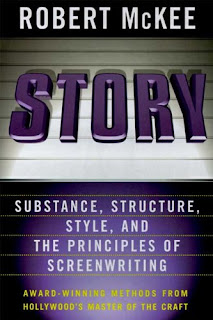
"Story: Style, Structure, Substance, and the Principles of Screenwriting", Robert McKee

Image
Robert McKee is an author, lecturer and story consultant. He gives seminars around the world on the principles of screenwriting and the conventions of different genres (comedy, thriller…). His book Story: Style, Structure, Substance, and the Principles of Screenwriting  is considered one of the greatest references for screenwriters. In it, McKee exposes each kind of plot, the structure of a story, how a scene should develop in moments of action / reaction (beats),  how to give dimension to the characters,  the symbolism that objects can have and how they can contribute to the filmic form,  among many other aspects while from acclaimed and world famous films as references. Also , the book discusses the proper language to use in a screenplay without forgetting the axiom:  show, don’t tell . Either for a film, a novel or a play, McKee has created a universal book that reminds the reader about the pleasure of telling a good story. Excerpts: Characteri...

"The Conversations: Walter Murch and the Art of Editing Film", Michael Ondaatje

Image
Walter Murch is one of the most respected film editors and sound designers, one of New Hollywod's central figures, having worked with Francis Ford Coppola in, for example  The Conversation  (1974)   and  Apocalypse Now  (1979) and George Lucas in  THX 1138   (1971) and  American Graffiti  (1973), in addition to having taken part in the restoration of Orson Welles's  Touch of Evil  from the notes that he had sent to Universal. He also edited The English Patient (1996) an adaptation of Michael Ondaatje's famous novel. During several years, Murch and Ondaatje reunited for a series of interviews in which both discussed their crafts and the similarities they observed in editing and literature. Those interviews were collected in The Conversations: Walter Murch and the Art of Editing Film . In it, Murch comments some of the scenes in certain films that he worked, and shows an enviable knowledge of painting, music, among other arts an...

"In the Blink of an Eye", Walter Murch

Image
Walter Murch is one of the most respected film editors and sound designers, one of New Hollywod's central figures, having worked with Francis Ford Coppola in The Rain People (1969), The Godfather  (1972), The Conversation (1974)   and  Apocalypse Now (1979) and George Lucas in THX 1138   (1971) and American Graffiti (1973), in addition to having taken part in the restoration of Orson Welles's Touch of Evil from the notes that he had sent to Universal. His book In the Blink of the Eye is both pertinent to pen and camera artists, to readers and audiences. In it, Murch exposes his philosophy of editing, his set of thoughts on how to find the identity of a film from a series of chaotic excerpts when the screenplay does not provide all the answers, how small details (one shot before another) can change the direction of the scene and, consequently, the audience's response to it. Full of analogies that show what kind of editing problems can arise and what are...

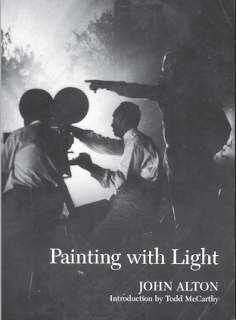
"Painting With Light", John Alton

Image
John Alton (1901-1996) was a true master of light, one of the most respected cinematographers, having left marks that characterized the cinema noir , notably through his collaborations with Anthony Mann [ T-Men  (1947), Raw Deal (1948)] and Joseph H. Lewis [ The Big Combo (1955)]. Alton also worked with Allan Dwan, Vincent Minnelli, Richard Brooks, among others. His films are characterized by a high contrast black-and-white, an astounding use of darkness in real locations, low angles with oblique lines delineated in their compositions, suffocating fogs and intimidating silhouettes. His book Painting Light was the first written by a major Hollywood cameraman. In it, Alton explains how to get some lighting effects, shooting techniques in different locations (exteriors or interiors) and climates, and the emotions that can arouse in the viewer through them. Even though the technical materials of that time have suffered developments, the theory in how to use them, that is,...

"Film History: An Introduction", David Bordwell and Kristin Thompson

Image
David Bordwell and Kristin Thompson are a couple of film historians and film theorists who have written two widely used film textbooks, Film Art: An Introduction and Film History.  They keep updating their blog  Observations on Film Art  with outstanding analysis that discuss “film techniques, formal strategies, stylistic choices, norms and transformations of them, and genre conventions” that serve as a complement to their book  Film Art .  Film History: An Introduction is a detailed history of world cinema, from the invention of the first pre-film optical toys to the digital era. Bordwell and Thompson discuss the development of each genre, possibly all film movements, the changes in movie theaters since nickelodeons, various types of censorship, studios policies in the formal constructions of films (cinematography, editing, screenplays' narrative structure) and marketing strategies. A very ambitious book that does not look at the cinema as something indiv...