Posts

Showing posts with the label Film Editing

"FilmCraft: Editing", Justin Chang

Image
Justin Chang is an American film critic for the Los Angeles Times. His book Film Craft: Editing  is a collection of short interviews with 17 of the most acclaimed film editors in the world. In it are discussed the differences (not only physical but also psychological) between working on film and digital, the implications that a cut can have, different rhythmic approaches to the material, among many other filmic aspects. Chang has made an accessible little study that, in spite of avoiding the technical details of the craft, is a good starting point for anyone who wants to know more about film editing. Excerpts: "Films are cut and paced more quickly now, because that’s a reflection of the society we live in, which is much more about instant gratification, and it demands a pace that the audience will feel comfortable with." Richard Marks, co-editor of The Godfather Part II  (1974),  Apocalypse Now  (1979)... "You had to be more certain of your ideas in...

"The Conversations: Walter Murch and the Art of Editing Film", Michael Ondaatje

Image
Walter Murch is one of the most respected film editors and sound designers, one of New Hollywod's central figures, having worked with Francis Ford Coppola in, for example  The Conversation  (1974)   and  Apocalypse Now  (1979) and George Lucas in  THX 1138   (1971) and  American Graffiti  (1973), in addition to having taken part in the restoration of Orson Welles's  Touch of Evil  from the notes that he had sent to Universal. He also edited The English Patient (1996) an adaptation of Michael Ondaatje's famous novel. During several years, Murch and Ondaatje reunited for a series of interviews in which both discussed their crafts and the similarities they observed in editing and literature. Those interviews were collected in The Conversations: Walter Murch and the Art of Editing Film . In it, Murch comments some of the scenes in certain films that he worked, and shows an enviable knowledge of painting, music, among other arts an...

"In the Blink of an Eye", Walter Murch

Image
Walter Murch is one of the most respected film editors and sound designers, one of New Hollywod's central figures, having worked with Francis Ford Coppola in The Rain People (1969), The Godfather  (1972), The Conversation (1974)   and  Apocalypse Now (1979) and George Lucas in THX 1138   (1971) and American Graffiti (1973), in addition to having taken part in the restoration of Orson Welles's Touch of Evil from the notes that he had sent to Universal. His book In the Blink of the Eye is both pertinent to pen and camera artists, to readers and audiences. In it, Murch exposes his philosophy of editing, his set of thoughts on how to find the identity of a film from a series of chaotic excerpts when the screenplay does not provide all the answers, how small details (one shot before another) can change the direction of the scene and, consequently, the audience's response to it. Full of analogies that show what kind of editing problems can arise and what are...

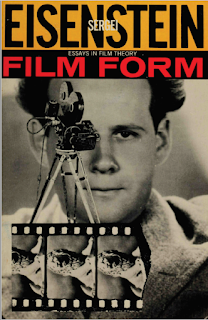
"Film Form: Essays in Film Theory", Sergei Eisenstein

Image
Sergei Eisenstein (1898-1948) was a Soviet filmmaker and film theorist. Known for his writings and practice of montage applied on his films, his filmic work shows an artist with total dominion of the plastic aspect of the cinema, causing a singular psychological effect through the collision of shots with carefully thought-out compositions. For the aesthetic avant-gardism of his works and contribution to the cinematographic technique, he is now regarded as one of the highest exponents in the history of cinema. He was a lover of Kabuki theater and classic literature, who influenced his way of thinking about films. A student of architecture, he joined the Bolshevik revolution, collaborating as a painter, decorator and director in the Proletcult Theatre (1920-1924), the aesthetic instrument of the new regime. Then he made the highly acclaimed  Strike  (1925),  Battleship Potemkin  (1925) and  October  (1928), whose unusual camera angles and dynamic use o...

"The Film Sense", Sergei Eisenstein

Image
Sergei Eisenstein (1898-1948) was a Soviet filmmaker and film theorist. Known for his writings and practice of montage applied on his films, his filmic work shows an artist with total dominion of the plastic aspect of the cinema, causing a singular psychological effect through the collision of shots with carefully thought-out compositions. For the aesthetic avant-gardism of his works and contribution to the cinematographic technique, he is now regarded as one of the highest exponents in the history of cinema. He was a lover of Kabuki theater and classic literature, who influenced his way of thinking about films. A student of architecture, he joined the Bolshevik revolution, collaborating as a painter, decorator and director in the Proletcult Theatre (1920-1924), the aesthetic instrument of the new regime. Then he made the highly acclaimed  Strike (1925), Battleship Potemkin (1925) and October (1928), whose unusual camera angles and dynamic use of cinematography and montage m...