Posts

"Who the Devil the Made It: Conversations with Legendary Film Directors", Peter Bogdanovich

Image
If the Nouvelle Vague became also famous for the transition of a group of film critics to the filmmaking activity, the same cannot be said of the New Hollywood, the American equivalent of the French cinematographic movement. If we look for names in the United States that, in the 60s and 70s, had similar paths to those of Godard or Truffaut, we come across essentially with two results: Paul Schrader and Peter Bogdanovich. A former writer for Esquire magazine, Bogdanovich became latter known for the elegiac film The Last Picture Show (1971), a farewell to a generation and, in a certain way, to the classic cinema it loved, through the history of a group of adolescents in the city of Texas during the time of the Korean War. Even though he was part of a generation that re-invented American cinema, the cinephilia in Bogdanovich's early films pays beautiful homages to his masters: John Ford on The Last Picture Show and Paper Moon and Howard Hawks in What's Up, Doc? .  Who Th...

"Cinema 2: The Time-Image", Gilles Deleuze

Image
Gilles Deleuze was a French philosopher and author of several monographs on Kant, Bergson, Espinosa, Nietzsche and Proust, and he discussed cinema as a serious philosophical matter. Through his two seminal books The Movement-Image and The Time-Image , Deleuze discusses the changes that have been observed in cinema, in the pre and postwar period, the classical and the modern.  The Time-Image is related to the modern cinema. According to Deleuze, after the Second World War, the action-image enters in crisis. It needs to be released from the sensory-motor situations and be replaced by pure optical and sound ones. Images convey a greater sense of solitude, cuts are delayed, characters no longer act, they rather see. Time is presented and felt by the spectator. Among other aspects, Deleuze discusses the depth-of-field in Welles, still lifes in Ozu, memory in Resnais and "crystal-images", that is, portraits of duration where past and present, real and imaginary, act...

"Cinema 1: The Movement Image", Gilles Deleuze

Image
Gilles Deleuze was a French philosopher and author of several monographs on Kant, Bergson, Espinosa, Nietzsche and Proust, and he discussed cinema as a serious philosophical matter. Through his two seminal books The Movement-Image and The Time-Image , Deleuze discusses the changes that have been observed in cinema, in the pre and postwar period, the classical and the modern.  The images that relate to "the movement-image" are divided into three parts: perception-image (how a character sees an event, mainly exposed in long-shot), affection-image (the emotional experience suffered by a character, close-up) and action-image (how a character interacts with his environment, medium-shot), that is, time is less important than the narrative flow, and each cut, each frame, is part of a constantly moving whole, conveying a simulation of a sensorimotor scheme. The purpose of the montage is to establish a continuous movement. Deleuze also discusses the two structures that domina...

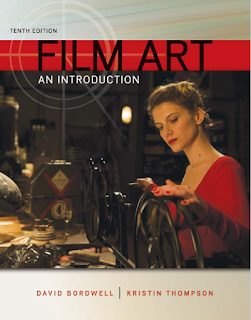
"Film Art: An Introduction", David Bordwell and Kristin Thompson

Image
David Bordwell and Kristin Thompson are a couple of film historians and film theorists who have written two widely used film textbooks, Film Art: An Introduction and Film History . They keep updating their blog Observations on Film Art with outstanding analysis that discuss “film techniques, formal strategies, stylistic choices, norms and transformations of them, and genre conventions” that serve as a complement to their book Film Art .  This book, originally published in 1979, is already in the 11th edition and has become, possibly, the best starting point if you want to engage in film criticism or even filmmaking activity. It contains the correct terms to make a film analysis of mise en scène , cinematography, editing and sound. With them, Bordwell and Thompson construct a series of analyzes of some classics as well as recent films, using stills of diverse scenes and discussing the effects that film directors achieve through filmic elements and how they help the vie...

"Transcendental Style in Film: Ozu, Bresson, Dreyer", Paul Schrader

Image
Paul Schrader is a director, screenwriter and film critic. Raised in a Calvinist family who deprived him of the cinema in his youth, Schrader was only able to see the first film at age 17 ("Other college kids had to vandalize government buildings. go to movies. ", as he would say later). This led to the construction of his late cinephilia in a more intellectual than emotional way. Hence, in the films written by him, the spectator feels uncomfortable with the imperfection and lack of attachment to his protagonists, existentially disturbed and self-destructive, but redeemed in the last scene that justifies the long process of violence to which they had been subjected. Although he is most remembered for his collaboration with Martin Scorsese in 4 films - Taxi Driver (1976), Raging Bull (1980), The Last Temptation of Christ (1988) and Bringing Out the Dead (1999) - the ones he directed are equally astonishing [ Hardcore (1978) and Affliction (1997)], with a strong and inn...

"Godard: Images, Sounds, Politics", Colin MacCabe

Image
Colin MacCabe is a British academic, writer, film producer and a professor of English and film at the University of Pittsburgh. A former editor of Screen magazine and a collaborator of British Film Institute (BFI), he has written books on James Joyce ( James Joyce and the Revolution of the Word ) and Jean-Luc Godard ( Godard: A Portrait of the Artist at 70 ). His book Godard: Images, Sounds, Politics analyses visual and sound aspects of the French filmmaker films since the Nouvelle Vague years until his television work, investigating Godard’s oeuvre through a technological, political and sexual perspective. In each chapter Godard gives a brief comment through interviews conducted by MacCabe. Excerpts: “[On Une Femme Mariée ] When we are made privy to her inner thoughts they offer no coherent account of her situation but rather a stream of disconnected phrases. This lack of a coherent view enables the film to break down a unified image of a woman’s body, held in a man’s lo...

"The Films of Jean-Luc Godard: Seeing the Invisible", David Sterritt

Image
Jean-Luc Godard (1930) is, arguably, not only the most important living filmmaker, but also one of the greatest directors of all-time. A philosopher thinking with a camera, raising questions about cinema, society, politics and History, in innovative and non-conforming ways, his body of work has influenced filmmakers from Europe to America, from the mainstream to the avant-garde, more than any other director. He is best known for being part of the  Nouvelle Vague  with revolutionary movies as the cinephilic and exuberant noir  À Bout de Souffle  ( Breathless , 1960), the existentialist  Vivre Sa Vie  ( My Life to Live , 1962) or the disconsolately romantic  Le Mépris  ( Contempt , 1963). From the end of the '60s until mid-'70s he entered in a militant phase with Jean-Pierre Gorin and continued a controversial oeuvre with political films as  Vladimir et Rosa  (1971). In the '80s he returned to, in a way, more commercial pictures as ...